
Even while fish stocks are depleting in Zanzibar and the warming ocean makes seaweed farming unprofitable, sponge farming is serving as a buffer against both climate and economic shocks for 13 women in Jambiani, a fishing village of about 9,000 on this island on the Indian Ocean coast.
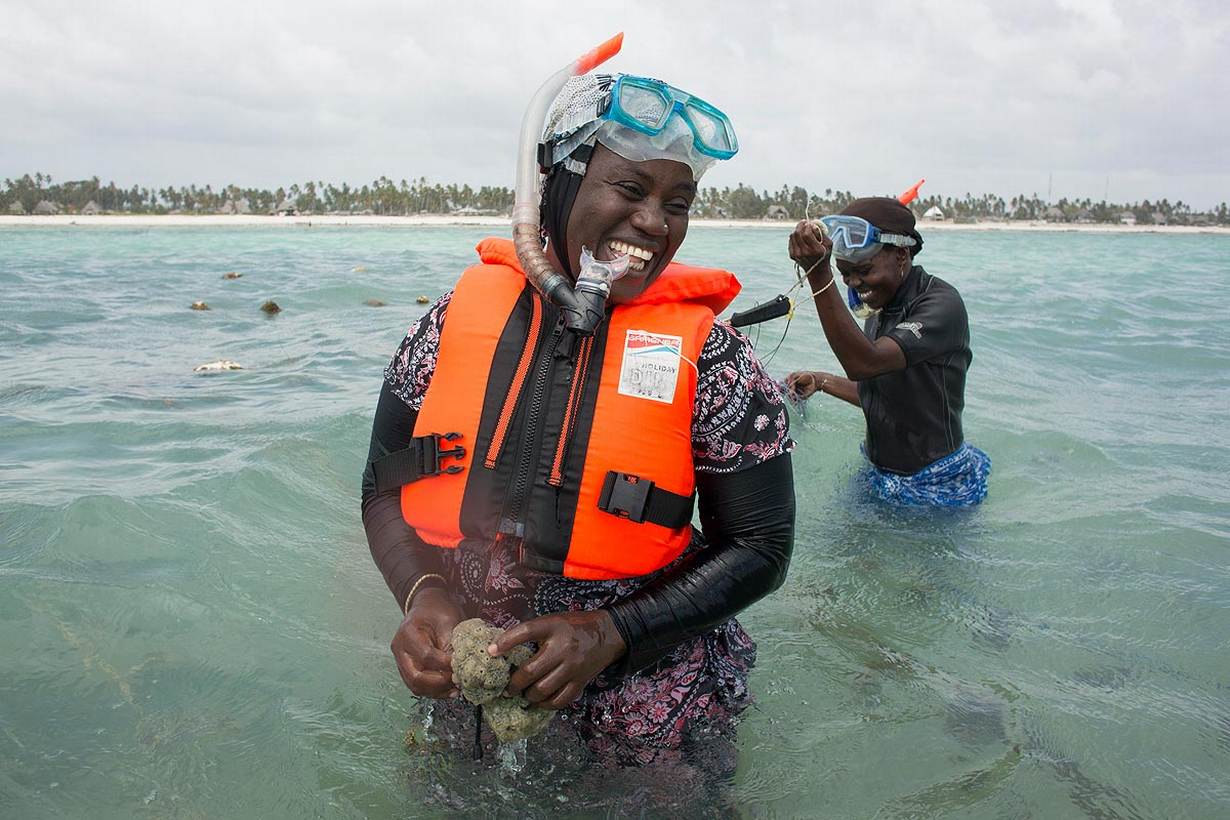
Each woman completes a one-year training, learning how to swim, maintain their own sponge farm, and sell their product. They are growing about 1,500 sponges, which bob on thick ropes for months before the women harvest, clean and sell them to shops and tourists.
The sponges offer an eco-friendly alternative to synthetic sponges. They are more resilient to a changing climate than seaweed, need less maintenance and sell at higher prices to hotels and tourists. The sponges also filter and feed on particles in the water and provide an alternative to overfishing.
Continue reading Hopebuilding