
Technology created by a Stockholm-based startup to run self-service grocery stores remotely is helping rural communities in Sweden, and the idea is catching on elsewhere as well, as smartphones make possible things we didn’t even imagine a few decades ago.
Daniel Lundh launched Storekey and Lifvs in 2018 because he saw a gap in the market. Many rural communities had lost their grocery stores in the 1990s when large supermarket chains arrived, creating ‘food deserts’ in remote areas. In 1985, there were 8,500 supermarkets in Sweden. By 2010 there were fewer than 3,500.
“We saw there was definitely a need for this type of service, but to be able to survive on a much lower customer base, we needed to be able to control our cost of operations to at least keep some margin and have a price point that’s acceptable for the consumer,” said Lundh.
Low labor and rental costs enabled Lifvs to open stores in low traffic areas and rural communities, and the smartphone app means that the store can operate 24/7 without any staff present. The app is connected to BankID, Sweden’s national identification app operated by its banks, which verifies the customer’s details. Shoppers use the company’s mobile app to gain entry to a store and scan bar codes for the products they want.

Lundh says the technology behind the app uses AI to offer customers personalized deals and coupons based on previous shopping trips. Some Lifvs stores have lockers to let customers pick up orders placed online. Staff members fill e-commerce orders when they stop by to take care of other tasks.
Many rural municipalities in Sweden are so eager to restore village shopping that Lifvs does not have to scout for sites – citizens’ groups and municipalities approach it. “After we establish a store, within the first month we have 84% of the people living in the community who have completed a purchase,” Lundh says.
In 2021, Lundh said that Lifvs was making its platform available to other retailers and positioning its system as a way for retailers to free up staff to handle tasks other than running cash registers rather than just a mechanism to run unattended stores. “The whole retail industry is trying to figure out how to digitize the store, and they are coming to us now to license [our] platform, which is super exciting,” he told Grocery Dive. “I don’t [care] if you’re a grocery store or a bookstore. It doesn’t matter.”
Lifvs and Storekey have recently decided to concentrate entirely on its core business – “developing the groundbreaking technology and concepts behind unmanned and hybrid stores,” because this represents the future of retail. It says it now has nearly 100 clients in eight different countries.
The remote operation model is helping meet the needs for grocery stores in other countries, too.
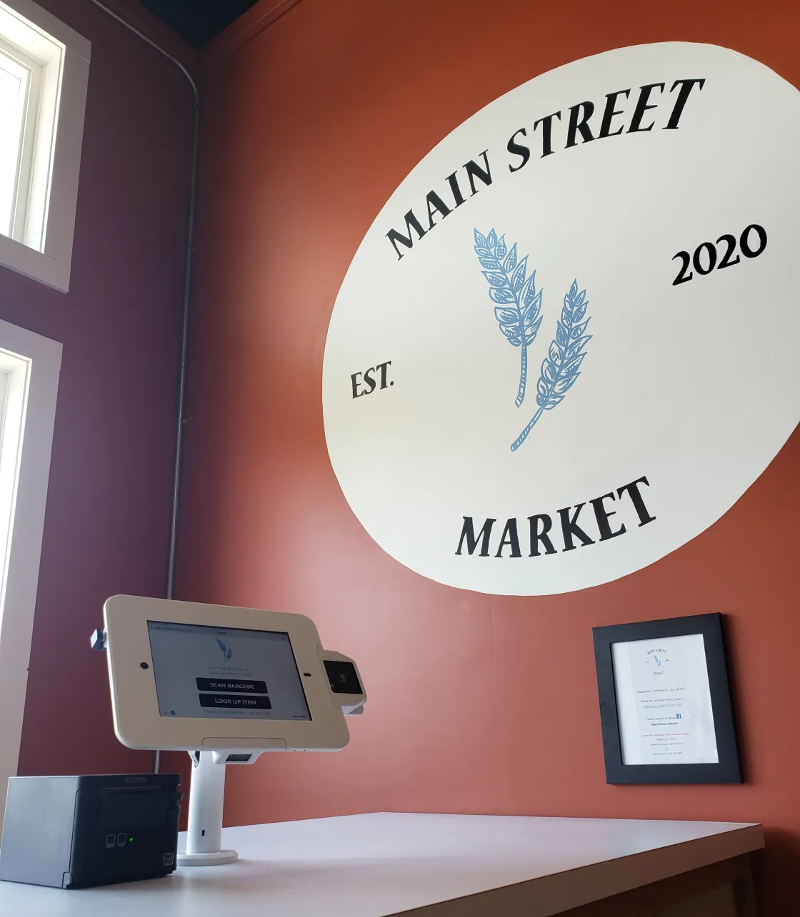
Evansville, Minnesota lost its local store in the mid-2010s. A local couple, Alex and Caileen Ostenson, opened Main Street Market, with the help of community residents who chipped in to cover the cost of renovations. Members pay $75 annually.
The store is staffed three days each week. On days it’s closed, members use a phone app to open the door, scan their groceries, and pay. Customers can leave suggestions for new items on a chalkboard. Each customer has a unique code, so the Ostensons always know who’s in the store
The concept is catching on outside rural areas, as well. Self-service grocery stores are popping up in apartment and condominium buildings in large cities like Denver and San Diego. In Canada, Aisle 24 has cashierless stores inside apartment buildings as well as in storefronts in Ontario and Quebec.
In Iowa, grocer Theo Ramsey’s Fresh out of the Box online fresh food and hardware delivery service is bringing fresh food back to rural communities. Customers order groceries online and he delivers the orders the next day to refrigerated lockers in Lenox and Manning, where he has grocery and hardware stores. Customers enter a code on the locker to unlock it and retrieve their groceries.
In 2023, New Jersey’s Economic Development Authority launched a grant program, FRIDG (Food Retail Innovation Delivery Grant), to help grocery stores buy refrigerated lockers to fulfill grocery orders from people living in food deserts. The lockers are located in public spaces, like community centers and libraries.
Sources:
How Do You Buy Groceries When There’s No Grocery Store? These Communities Figured It Out. Daily Yonder, Nov. 13, 2023
These high-tech, unstaffed stores are tiny, and open 24/7 to help residents get their groceries in rural Sweden. Take a look inside. Business Insider, Aug. 8, 2021
Unstaffed, digital supermarkets transform rural Sweden. Guardian, Sep. 6, 2020
Aisles Abroad: A Swedish startup’s tech-enabled approach to rural grocery shopping Grocery Dive, Nov. 3, 2021
 Hopebuilding