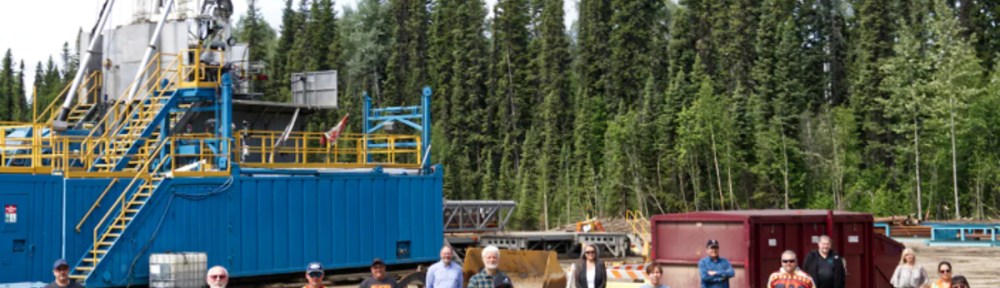
A remote Indigenous community in northern BC is poised to create the first commercial-scale geothermal electricity generating plant in British Columbia, in a project that its chief describes as ‘nation-building’. It will create jobs that will bring people home, power the community and its neighbours, increase food security through a greenhouse, and do it all renewably from a site that used to produce natural gas.
“Fort Nelson First Nation is paving the way in Canada’s emerging geothermal industry—Tu Deh-Kah Geothermal is leading the energy transition and bringing new life to the depleted Clarke Lake gas field,” says Chief Sharleen Gale. “Our people’s future depends on our ability to transform into a renewable-energy economy that can also support food security in our territory. We are proud of the sustainable future we are building for generations to come.”
The project is on track for the start of construction in the spring of 2024 with a commercial operation date in early 2026. Tu Deh-Kah means “water in the form of steam” in the Dene language.
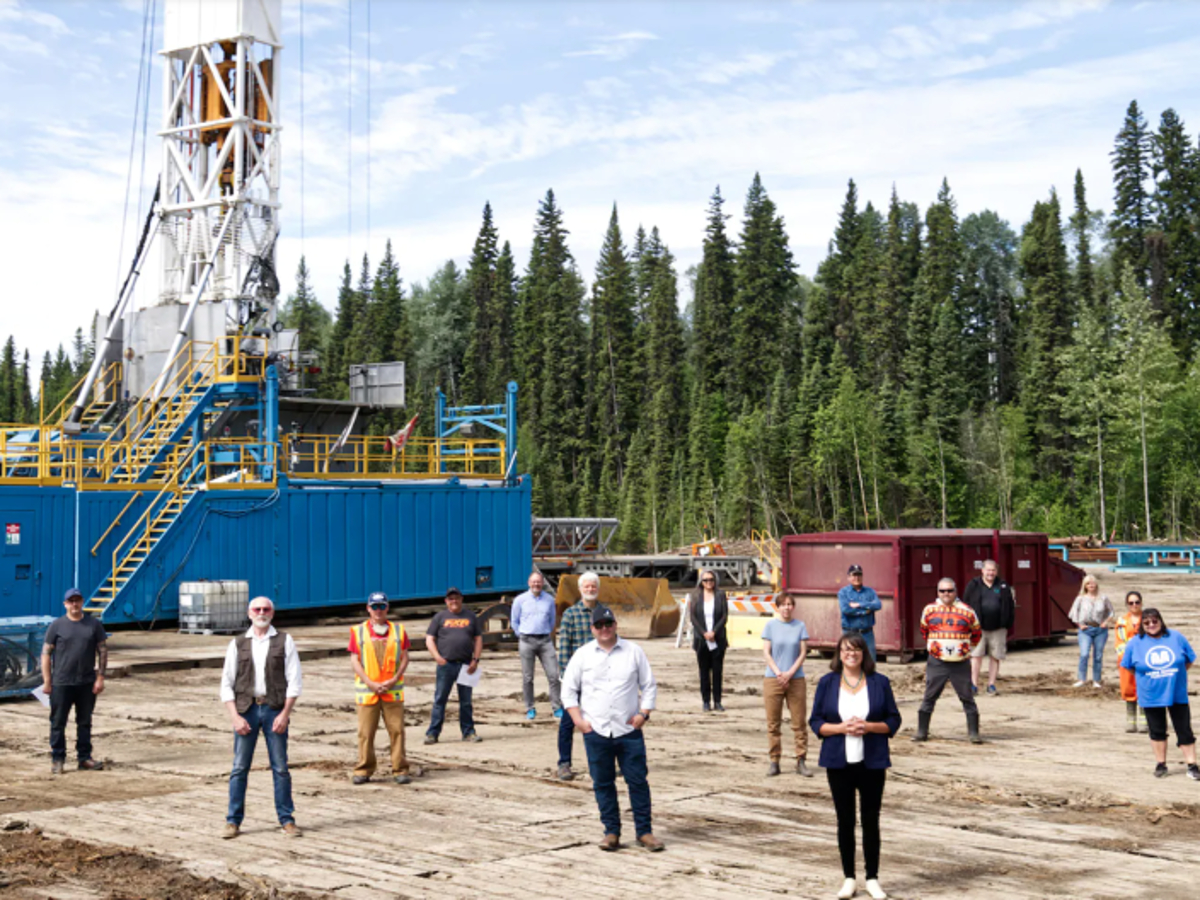
Energy industry observers see it as a bellwether for future geothermal energy development projects that can decarbonize the economies of Northwestern Canada, contributing to sustainable economic growth and energy independence in a region where resource development has historically been boom-and-bust.
Industrial development of geothermal energy is a good bet for the region, because the FNFN territory, which is roughly the same area as Switzerland, has a higher than average thermal gradient, meaning hot ground temperatures are available closer to the surface than in most places in Canada.
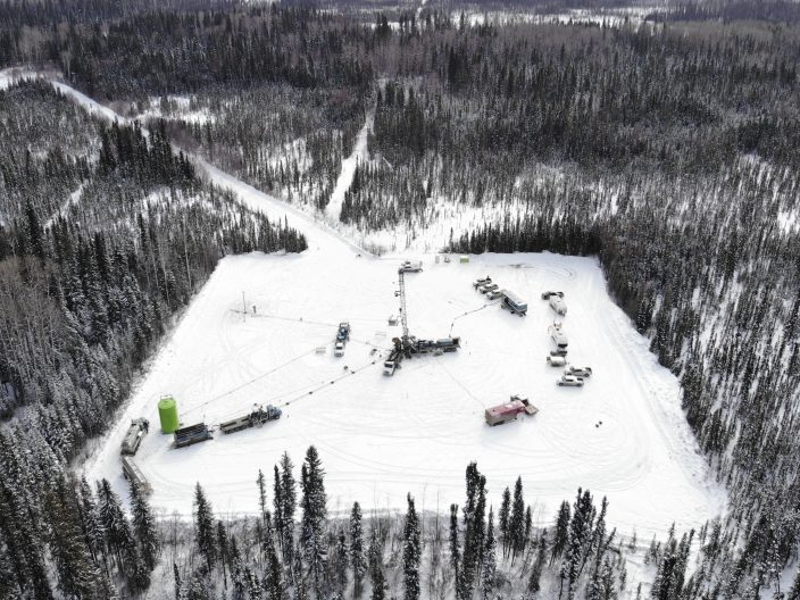
The Clarke Lake field has been producing gas since the 1960s but while it still produces small volumes of gas, the field’s upper zone has been almost entirely depleted, says Jim Hodgson, CEO of Deh Tai LP and CEO of Clarke Lake Geothermal LP, the legal name of the geothermal project.
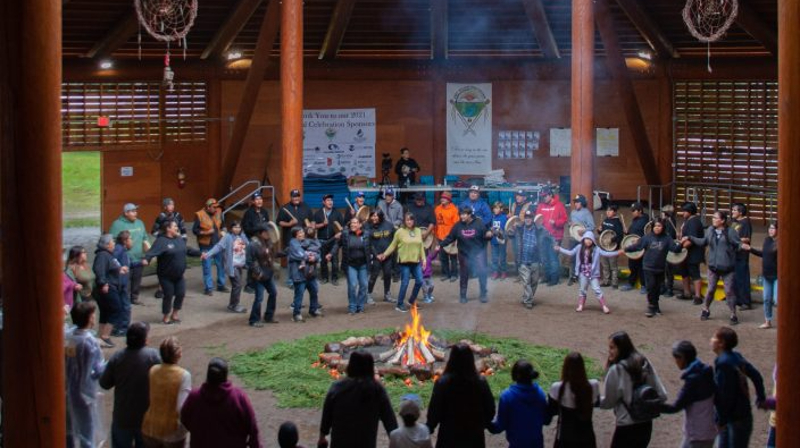
Thanks to traditional Indigenous knowledge, a field of geothermal energy was discovered below the gas field. FNFN members had noticed the ground below the gas pipeline was free of snow in the winter, suggesting something hot lay underneath.
In 2020, FNFN acquired the depleted gas well from the operator and in 2021 it stabilized the well pad, deepened the existing well, drilled a geothermal production well and completed a high-flow well test. It recently completed a 30-day pump test, which in the geothermal industry provides significant proof of the resource quantity and its characteristics, says John Ebell, geothermal programs manager with the Barkley Project Group.
That means the project team can proceed with final project design and permitting for an electrical generation facility.
Hodgson says that once it is up and running, the project is expected to produce between seven and 11 megawatts of electricity – enough electricity to serve approximately 10,000 homes, in a region that has not been part of the provincial electricity grid. Plans call for the power that is generated by geothermal energy to be sold to BC Hydro.
Once project funding is in place, hopefully in 2024, project construction will be undertaken by an engineering, procurement and construction (EPC) or project management company, says Hodgson.
The project will contribute to food security as well as energy security. “Once we have the greenhouse operation mastered, we plan on expanding to a bigger commercial operation for the area around Fort Nelson,” he says. “If we are able to develop a niche crop, or even more than one crop, it could be possible to export further north and south, because we have a large, relatively unused airport in Fort Nelson.”
While the remote location made it difficult to find all the needed materials and to find enough staff, the project got support from the First Nations Major Projects Coalition, a non-profit organization that helps its 148 members across Canada develop projects of more than $100 million in value.
Natural Resources Canada’s Emerging Renewable Power Program assisted the early and most risky phases of geothermal resource testing and characterization which made it possible to secure the financing needed to construct the project well field and the geothermal generation facility. Other support has come from the Western Economic Diversification Canada, Indigenous Services Canada, the Province of BC, and the New Relationship Trust.
Sources:
Fort Nelson First Nation developing geothermal energy on site of depleted gas wells. Journal of Commerce, Nov. 29, 2023
Critical milestone achieved. Tu Deh-Kah website
Tu Deh-Kah Geothermal Barkley Project Group
Cover image and all photos: Barkey Project Group
 Hopebuilding