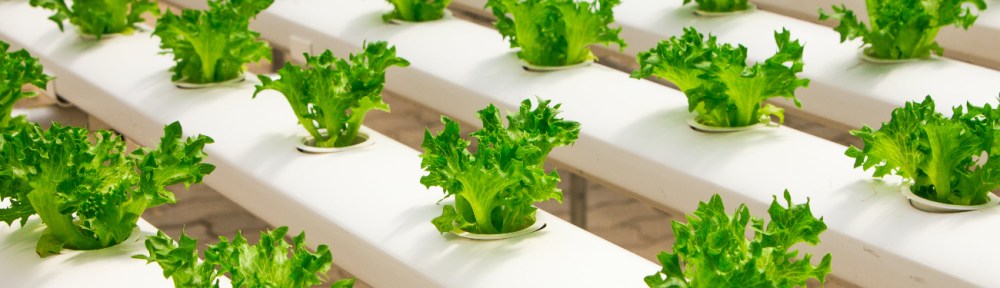
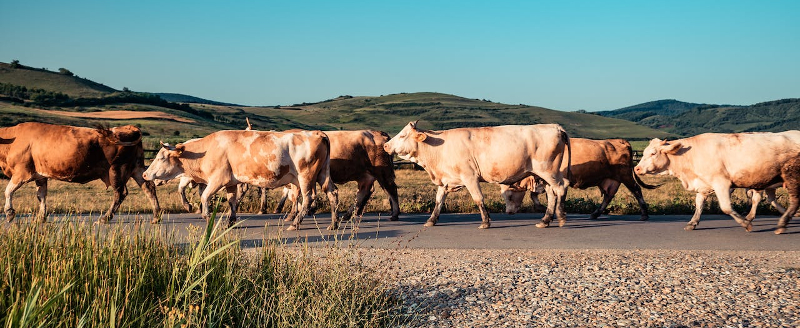
Given how much land is used to raise cattle in the world, reducing our meat consumption could actually free up a lot of land for regeneration. That is one of the premises of RethinkX’s analysis of future trends in food and agriculture. I mention it to set a context for today’s blog post, which focuses on the Danish government’s national action plan for moving towards a richer plant-based food diet and increased production of plant-based foods.
“By 2030, the number of cows in the U.S. will have fallen by 50% and the cattle farming industry will be all but bankrupt,” says RethinkX. “All other livestock industries will suffer a similar fate, while the knock-on effects for crop farmers and businesses throughout the value chain will be severe.”
Modern food disruption, made possible by rapid advances in precision biology and an entirely new production model they call Food-as-Software, will have profound implications for the wider economy, society, and environment as well as for the industrial agriculture industry, it says in its Food and Agriculture report.
In the executive summary (well worth reading if you don’t have time to read the whole report), it notes that modern alternatives will be up to 100 times more land efficient, 10-25 times more feedstock efficient, 20 times more time efficient, 10 times more water efficient, and will produce much less waste.
By 2035, they say, about 60% of the land currently used for livestock and feed production will be freed for other uses. “This represents one-quarter of the continental U.S. – almost as much land as was acquired during the Louisiana Purchase of 1803. The opportunity to reimagine the American landscape by repurposing this land is wholly unprecedented,” they say.
What this means, of course, is that not only is land use going to change, but so will what we eat. They are intertwined, and we can already start to see this trend as meat gets more expensive to buy in the grocery store and people turn to cheaper alternatives.
And that is why I found the BBC’s report on what Denmark is so interesting – because it shows us this struggle in real time.
Danish politicians are hoping their agricultural sector will see a dietary shift towards plant-based food as an opportunity to build new skills and jobs, not a threat to their livelihoods. “It’s such an important climate solution. It’s as big as wind-turbines,” says former environment minister Ida Auken. “We need it not to be a huge fight with farmers, like in the Netherlands, or between vegans and carnivores. But about getting a more interesting food culture.”
The seeds of Denmark’s shift were sown in the mass protests inspired by Greta Thunberg, says Rune-Christoffer Dragsdahl, secretary-general of the Vegetarian Society of Denmark, who helped draft the plan. After climate change became a major issue in Denmark’s 2019 election, and the country adopted an ambitious 70% emission reduction target, new and often unusual alliances developed, showing space for cross-party support.
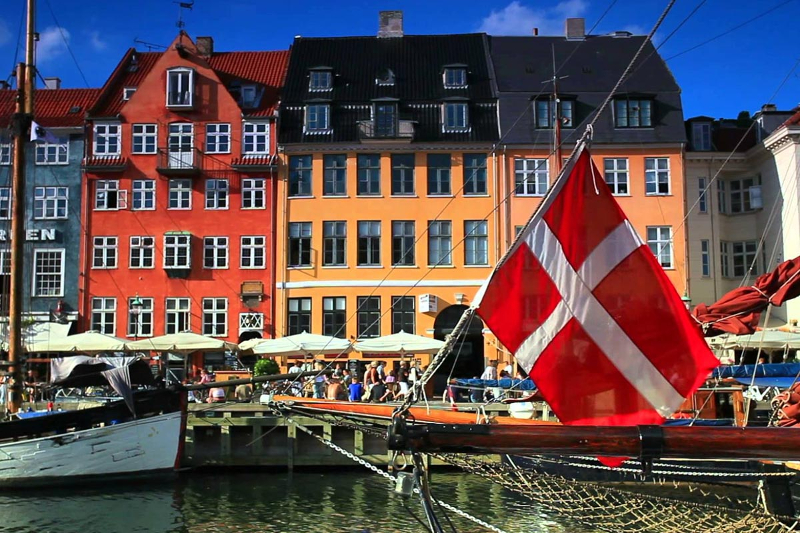
The success of the Action Plan coming to life is a convergence of favorable elements and genuine pragmatism within Denmark, says Jacob Jensen, Denmark’s Minister of Food, Agriculture and Fisheries Forbes. “It is a shared effort from all political parties, but as well a close cooperation between the public and private,” he said.
Pointing out the potential for job creation is key, says former environment minister Ida Auken, especially as Denmark is seeing job losses in the dairy and slaughter sectors, in part due to rising production costs in the wake of the war in Ukraine. “If we get 2% of that plant-based market, it could mean 20,000 to 40,000 jobs, which is a lot in Denmark.”
The government has created a Plant-Based Food Grant to support the growth of plant-based production, with half the amount earmarked for projects related to organic foods. Retraining kitchen and food services, projects that increase the supply of plant-based foods, and projects to increase consumer demand also are part of the approach.
Other nations are already starting to take note of the Danish paradigm shift, BBC says. In Germany, the government has allocated €38m ($41.5m) in its 2024 budget for promoting plant-based, precision-fermented and cell-cultivated proteins, alongside transforming agriculture, while South Korea has described the plant-based food industry as a “new growth engine”.
In countries which rely on livestock production and can’t easily change that, interventions like improving pastures and introducing rotational grazing could cut emissions, said Ciniro Costa Jr, a scientist from the Alliance of Biodiversity International and CIAT.
Between 2017 and 2022, Denmark witnessed a twofold increase in protein-rich plant crop production, generating an economic value of $1,2 billion, says Forbes. But compared to animal-based production the country has still a long way to go, it concludes.
However, there has been such interest among policymakers worldwide that the Danish agriculture ministry is now translating the 40-pages Plant-Based Action Plan into English, Forbes says.
Sources:
How Denmark Made The Plant-Based Action Plan Possible Forbes, Nov. 23, 2023
Denmark: The major pork producer trying to wean itself off eating meat BBC, Dec. 1, 2023
Food and Agriculture. RethinkX
Cover image: Jatuphon Buraphon, Pexels
 Hopebuilding

I am somewhat skeptical about these claims yet this is very interesting!