
In 2014, a farmer in northern British Columbia decided to add heritage pigs to his farm. Pigs eat a lot. The need to feed them sparked a win-win-win food recovery system which now is working with small farmers and grocery stores all across Canada, creating a simple, sustainable way to do the right thing for the environment while helping strengthen communities.
“We’re keeping food out of the garbage,” says co-founder Jaime White. “We’re supporting local agriculture and sustainable food. And we’re doing it in a way that everybody wins.”
By 2021, Loop Resources had grown to 160 retail partners and 1,600 farms, with between one and two million kilograms of food waste being diverted from landfills every month across Western Canada. Now there are almost 500 grocery stores and about 4,000 small farms in its network across Canada. Loop has 41 staff and operates in every province and territory in Canada except Quebec, the Northwest Territories and Prince Edward Island.
While various publications have written about it over the last decade, I hadn’t heard about it until The Tyee wrote about it as part of a new section it’s calling ‘What works’. It’s an inspiring story of what happens when a person sets out to solve a particular problem and then sees that the solution can work for many more people.
“As farmers, let’s be participants in the change that we want to encourage,” says White, co-founder of Loop Resources, who with his wife, Jennifer, raises sheep, goats, ducks, and those heritage pigs. “We want a world where most of the food that we are growing is actually going to feed people.”
His motivations are straightforward – he believes in knowing where his food comes from, in minimizing waste, and in spending more time on his farm with his family. He is also a man who sees the big picture, having grown up in the cattle and forage country around Smithers, and in summers, helped out on his grandparents’ mixed farm near Brandon, Manitoba.
“One of the stories that needs to be told here is how farming is the ultimate recycling engine,” he says. “You want to fix the environment? Small farms. You want to fix our eco-industrial food problem? Larger farms.”
The basic idea behind Loop Resources is pretty straightforward. What is more complicated is creating and managing the system to make it a reality.
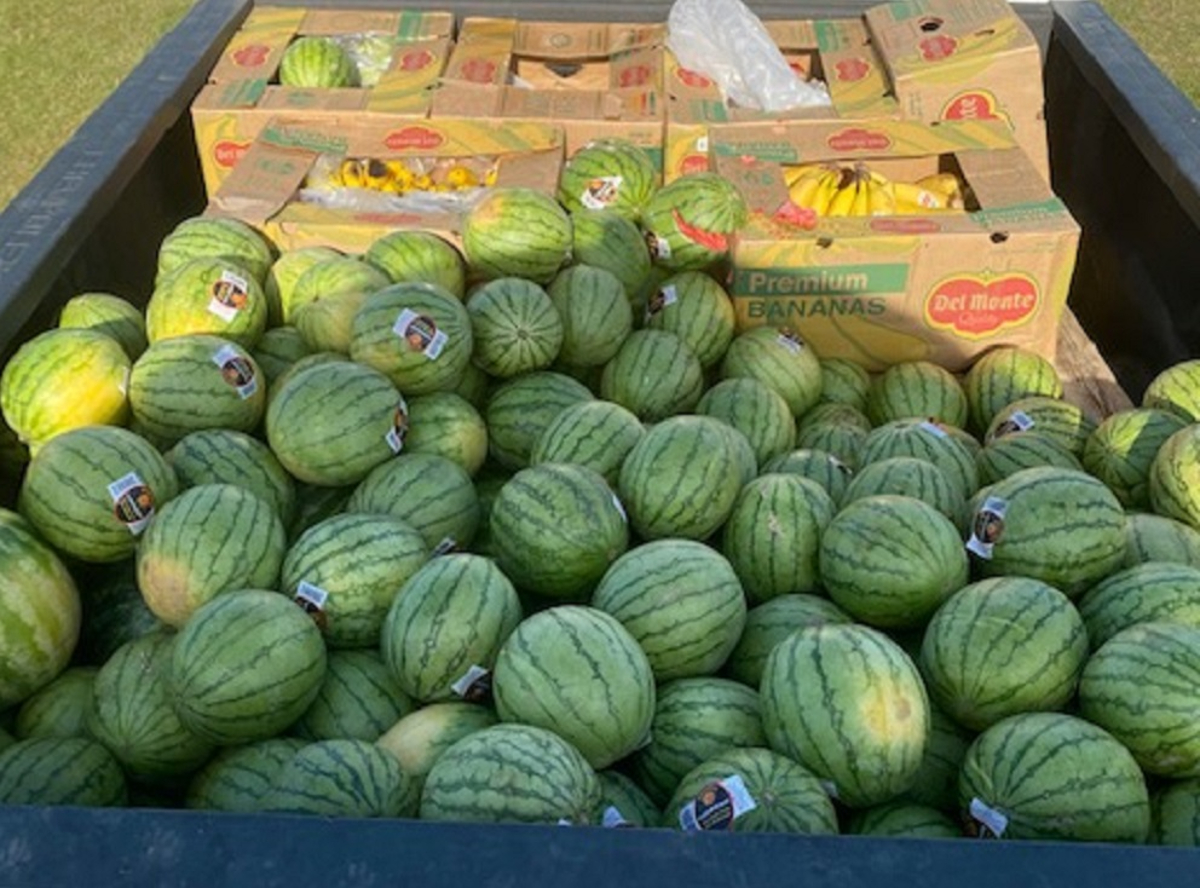
“Loop is based on a simple idea: Food should be put to its highest and best use. We provide simple systems with safe liability structures that enable food wholesalers, retailers, and producers to divert one hundred percent of their unsaleable food away from landfill, and towards those in their community who can use it best.
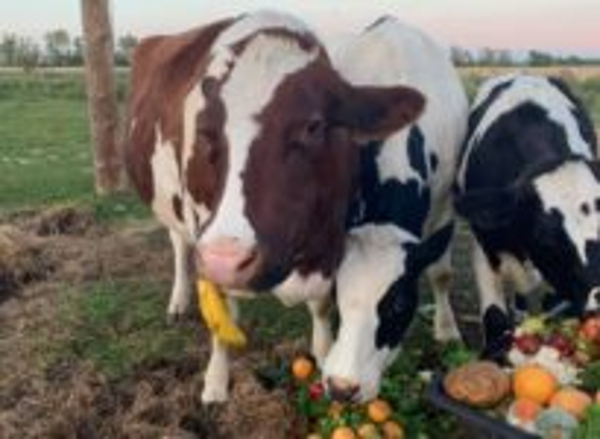
For stores, it means diverting unsaleable food away from the landfill while reducing staff time and saving disposal costs. For charities, it means access to food for their programs without overwhelming their resources. For farmers, it means food that can be used as feed for their animals, as bio-energy, or as compost.”

Loop tends to work with small farms that are on the verge of producing enough to sell into the system. Scaling up would mean that their feed costs, their single largest cost, exceed their off-farm earnings. “And that’s where Loop is a really nice dovetail fit,” White says.
To create Loop Resources, White found solutions to all the problems he heard about when he asked his local coop in Dawson Creek if he could get its food waste to feed the pigs he had added to his existing farm – unreliability, liability, brand damage, pests, and health and safety problems. Back at home, White “made a few phone calls to some people I knew in insurance and contracting” and found a way to insure the store against the risks and to pay penalties if he didn’t keep his word. He began making regular rounds to pick up excess food from the Dawson Co-op, and looped in a couple of his neighbouring farms, too.
Since it began, Loop has diverted more than 266 million pounds of food away from landfills and towards livestock in need.
But beyond helping to create zero waste grocery stores, extending the life of landfills, generating less methane gases from decomposing food, Loop Resources is playing a key role in helping small farms ramp up their production of good food locally.
“I don’t think people realize how many small farmers there are in their community and how many people are trying to change our food security picture by investing in local production,” he said. “Whether it’s local production for sale or just local production for them and their family, both of those things should be celebrated.”
Part of its work is around managing the risks of feeding surplus groceries to livestock – educating participating farmers, following up on any issues, and checking in with the Canadian Food Inspection Agency to make sure the program is on track. White has also built safeguards into the program to reduce risk and to spot emerging problems quickly.
Store employees separate food by department to avoid contaminating the loads. Participating farmers must remove and sort packaging from food items in the loads. Loop also has a real-time reporting system that allows producers and charities to send photos and notes about any issues, big or small, with loads, White says.
Sources:
Loop Resources website.
A Better Way to Nourish Livestock The Tyee, Jan. 7, 2024
Zero Food Waste Westview Co-op
The food that doesn’t reach the plate Better Farming, Jan. 2024
Supporting small farms and reducing food waste Canadian Cattlemen, Dec. 10, 2020
Loop program diverts food waste from the landfill and into the hands of those who need it most William Lake Tribune, Jan 26 2019
Cover image and all other images: Loop Resources
 Hopebuilding