
Disaster can be devastating – but it can also create the conditions for positive change. Puerto Rico, which was devastated by Hurricane Maria in 2017, is on the way to transforming its deteriorating grid while switching to clean energy that saves customers money and lets them share energy with neighbours.
Maria was the deadliest US natural disaster in more than a century, and may have kiled as many as 5,740 people, in large part because the hurricane caused the largest blackout in US history and the second largest in world history. The storm shuttered hospitals and restricted access to fresh food and clean water for millions of people.
But while it was a very hard way to learn the value of resiliency, that lesson is creating exciting new possibilities because Puerto Rico now is uniquely equipped for a residential-storage virtual power plant (VPP).
“They could have the real blueprint for energy transition,” Blake Richetta, the CEO of battery manufacturer Sonnen USA, told Grist. He says that Puerto Rico is primed for a system as advanced as In Germany, where more than 144,000 of Sonnen’s home batteries help stabilize and bolster the grid in real time.
It is a matter of pride for Puerto Ricans, says Javier Rúa-Jovet, chief policy officer at the Puerto Rico Solar and Energy Storage Association. “We’re doing something groundbreaking, and you’re preventing blackouts for everyone.”
More than 100,000 households now have rooftop solar, about 4,000 new systems are being installed each month, and the US government plans to spend $500 million on systems for vulnerable households. All those panels already offset Puerto Rico’s power needs by about 600 megawatts — more than its largest coal-powered peaker power plant generates, says Rúa-Jovet.
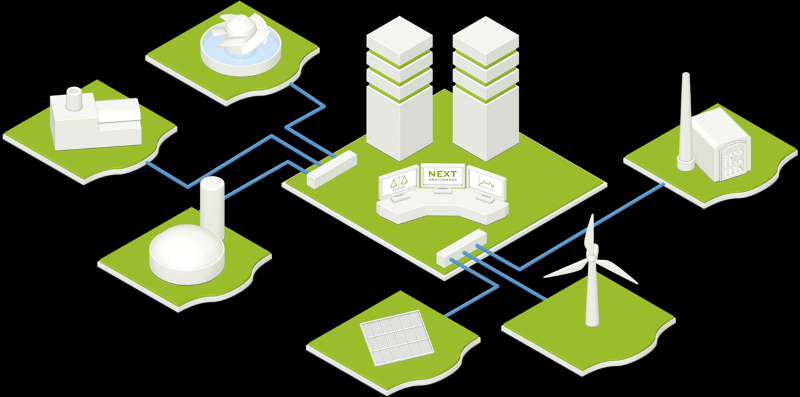
Virtual power plants link energy resources like home batteries, electric water heaters, or heat pumps to manage energy demand by adjusting smart thermostats during peak hours. Some VPPs also can supply power to the grid by drawing from home or even EV batteries. Tripling US VPP capacity by 2030 could supply 10 to 20% of peak demand by then, saving the US as much as $10 billion annually.
Nearly 2,000 households have already enrolled in a yearlong pilot by Puerto Rico’s utility Luma Energy, which will pull power from up to 6,500 households during energy shortages, providing about 26 megawatts of power. They all make money by sharing the power generated by their batteries, even though at first, that idea seemed “too good to be true“
If it expands to include all home batteries on Puerto Rico, it would be larger than any residential storage VPP in North America, says Ben Hertz-Shargel, a grid expert at the research firm Wood Mackenzie.
Cover image: The Walmart Supercenter in Caguas, Puerto Rico is one of five Walmart facilities on the island equipped with solar panels. In addition to Caguas, Walmart added solar to sites in Manati, Bayamon and two in Ponce. Walmart has a company wide goal to be supplied for 100% renewable energy and projects like this are helping move the company closer to its goal. Walmart, Wikimedia Commons
 Hopebuilding
