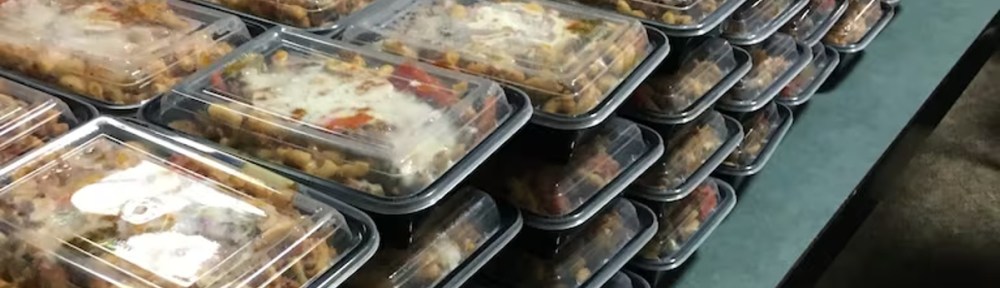
When an ice storm hit Oregon recently, making travel dangerous and knocking out power to restaurants and grocery stores, massive amounts of food were at risk of being wasted. So food redistribution nonprofits, including one that came into existence during the pandemic, played an even more crucial role than they do at more normal times.
Oregon Public Broadcasting reported on how this win-win-win happened, even in the midst of crisis. “A network of food redistribution nonprofits across the city has been working through icy conditions this week to salvage food from closed businesses and turn it into meals. And if one organization is unable to access an area, another nonprofit may be able to fill in the gap.”
Milk Crate Kitchen is a food redistribution nonprofit that normally uses mostly salvaged food to prepare and deliver 300 free gourmet meals to doorsteps. It began during the pandemic when chef Michael Casper – his plans to travel through South East Asia cancelled and laid off from his job – remembered what his late grandmother used to tell him — “If you don’t know what to do, do what you know”. He set out to provide “a night of not having to cook” for a few friends and families, which has grown from a self-funded mutual aid project to a registered nonprofit that has supplied over 9,077 family meals, which each feed up to four people.
After a shop in Northwest Portland called during the ice storm to say that it had nearly 30 pounds of extra bagels, but it was unsafe to drive there, Milk Crate Kitchen knew someone who lived nearby who could walk over, pick them up and deliver them to people sheltering at the nonprofit community center Friendly House.
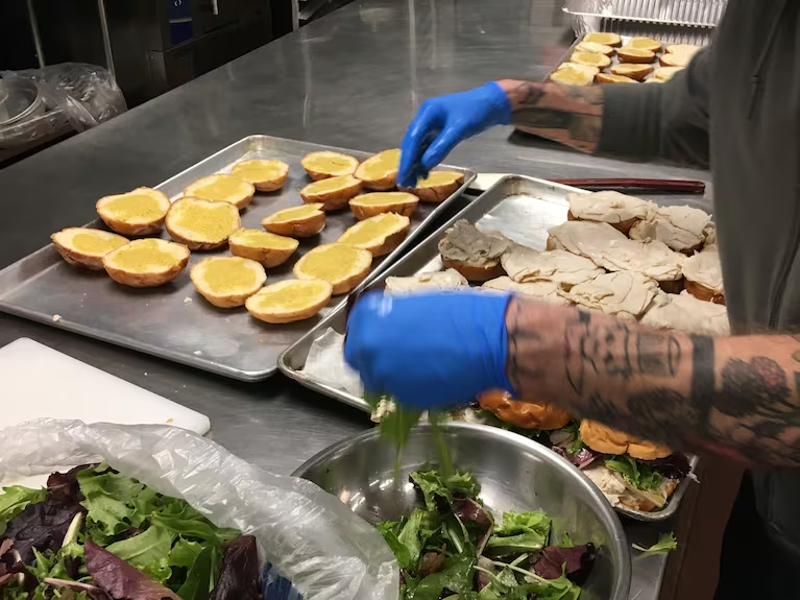
Urban Gleaners normally moves about 25,000 pounds of food through its warehouse, redistributing donations from grocery stores, corporate cafeterias, event centers and restaurants at more than 40 sites across the Portland metro area. Its pickups have been doubled or tripled in the icy weather.
Since Tracy Oseran created Urban Gleaners in 2006, it has grown into a vibrant volunteer-powered organization feeding more than 8,000 people each week through school pantries, summer free farmers markets, and mobile markets in low-income housing communities. Its volunteers collect and redistribute more than 80,000 pounds of food each month.
While school pantries have been shuttered across the state, staff and volunteers worked with other nonprofits to get food collected from Urban Gleaners out to different sites during the ice storm.
“The most vulnerable in our population are usually the most affected by this type of weather,” says executive director Nico Niebes. “To be able to work with other organizations that are able to open and get food out is super crucial.”
Over the course of the storm, county officials in the Portland metro area have opened additional emergency shelters. Stephanie Coleman, who coordinates emergency planning and operations for Clackamas County Social Services and helped run the overflow shelter at Clackamas Community College, got on the phone right away when the county opened up additional shelter space.
Milk Crate Kitchen prepared more than 100 meals at the facility they rent in central Portland, and then delivered the meals to the Clackamas Community College emergency shelter in Oregon City.
“They went above and beyond,” she said. “They put in more meals because they said, ‘we’re not sure if you accounted for staff, so we put more meals in there so everyone could participate and have hot food.’ The guests were just so appreciative — being in a shelter condition like that, and having just a hot wonderful meal, it really lifts a lot of people’s spirits.”
Cover image: Milk Crate Kitchen delivers more than 100 meals to an overflow emergency shelter at Clackamas Community College in Oregon City, Ore. Photo by Sherielyn Gardner.
 Hopebuilding