Reconciliation is about healing people, healing and transforming the land and water, correcting the stories told as part of the historical record, and protecting the bones of the ancestors
That kind of reconciliation is helping to restore the Great Salt Lake, whose brine shrimp feed much of the world, and to tell the story of a vital Shoshone wintering place that was abandoned after the US Army killed more than 400 people in four terrible hours in January 1863. Since the tribe bought the old wintering grounds in 2018, they have been transforming it into a place of environmental and cultural healing. This PBS video explains the story in detail.
“This is not a place of mourning. It’s a place of revitalizing,” says Rios Pacheco, the tribe’s cultural and spiritual advisor. “We’re going to revitalize the water. At the same time, we’re revitalizing our people.”
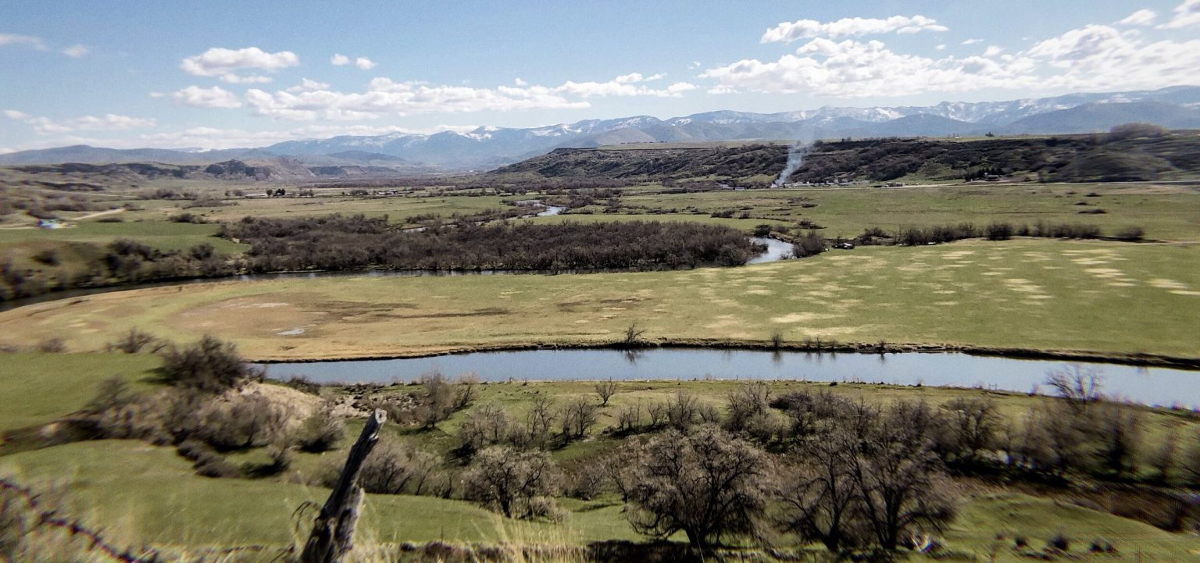
Over the generations, Wuda Ogwa was a place where tribal members traded salt from the Great Salt Lake, salmon from the Snake River, ducks and waterfowl harvested from wetlands and seeds collected from the desert. They had children there, found spouses there, and made new friends there. Now it is a sacred place where the bones of many of their ancestors lie under the ground.
“The whole story of that place changed within four hours,” says Brad Parry, vice-chair of the Northwestern Band of Shoshone Nation council. “We want to take that back.”
Now that they have ownership of Wuda Ogwa, the Shoshone are starting to change the landscape back to the time before it was parceled into farms, fields and homesteads, and before the Bear River stopped flowing to the shriveling Great Salt Lake in spring and summer as a result of consumption, climate change and drought.
“All of us, and my family members, we’re still processing” what happened there, Parry said. “What we’ve learned throughout life is it helps to talk about your trauma. … Now we’re fighting to make sure our story is told, and that people understand the correct story.”

Boa Ogoi (Wuda Ogwa) Cultural Interpretive Center
The area, now known as Preston, Idaho, just 10 miles north of the Utah border, was where the Northwestern Band gathered to perform the Warm Dance and connect with other Shoshone. A geothermal spring meant water always flowed, even in subzero temperatures, so people called it “Sowo Gahni,” or “breath from lungs”.
The Northwestern Shoshone hope to be able to return 13,000 acre-feet of water to the diminishing Great Salt Lake annually by shifting vegetation from invasives to native plants, cleaning up creeks and restoring degraded agricultural fields to wetlands on the 350 acres of their ancestral land they bought in 2018.
The tribe hopes to plant 300,000 native trees and shrubs on space freed up when the Utah Conservation Corps removed hundreds of thousands of invasive Russian olives. These thirsty trees, which consume 75 gallons of water per day, were introduced to Idaho in the early 1900s and rapidly became invasive.
The collaborative effort involves scientists at Utah State University; BioWest, an environmental science consulting firm; conservation nonprofits; the Utah Conservation Corps; the US Fish and Wildlife Service and other federal agencies. Northwestern Shoshone and other tribal members play key roles on conservation and research teams.
On the first planting day since the land purchase, nearly 400 people came to plant 8,500 trees and shrubs from plastic trays filled with cuttings of willow, cottonwood, chokecherry and more. Before planting began, Pacheco offered a blessing. “I come to prepare the land because this land was walked through by people that had to give their life,” he said.
The native vegetation will stabilize the creek bank, and the willows and cottonwoods will provide habitat and food for wildlife. Deer, birds, bobcats and coyotes have been seen, and the tribe hopes elk and moose will return as well.
BioWest is fencing off part of Beaver Creek to keep cattle out, while USU students led by the nonprofit Sageland Collaborative are building beaver-dam analogs to filter out sediment and agricultural runoff. Eventually, the creek will be restored to its ancestral braided, meandering path.
“For thousands of years, this wasn’t a massacre site,” Brad Parry, vice-chair of the Northwestern Band of Shoshone Nation council, told the crowd at the planting day. “By inviting you all out and doing this, we want to recapture that,” he said. “We want to make this a place to come again.” Plans call for an interpretive centre, known as Boa Ogoi (Wuda Ogwa) Cultural Interpretive Center, to be built on the site.
Sources:
The Northwestern Shoshone are restoring the Bear River Massacre site High Country News, Jan 29 2024
The Great Salt Lake’s most important source of water has a troubled history. But there is hope its future may be better. Salt Lake Tribune, Dec 4 2022
Great Salt Lake ‘healing’ needs Native American input, Shoshone leader says Kuer
Water Restoration Project. PBS, Jul 8 2022
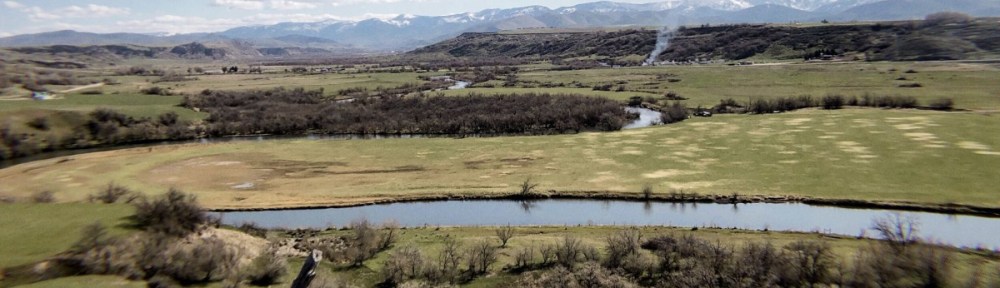
Cover image: Photo of Wuda Ogwa by Northwestern Band of the Shoshone Nation.
Cover image: Over the generations, Wuda Ogwa was a place where tribal members traded salt from the Great Salt Lake, salmon from the Snake River, ducks and waterfowl harvested from wetlands and seeds collected from the desert. They had children there, found spouses there, and made new friends there. Now it is a sacred place where the bones of many of their ancestors lie under the ground. (Photo/Northwestern Band of the Shoshone Nation)
 Hopebuilding