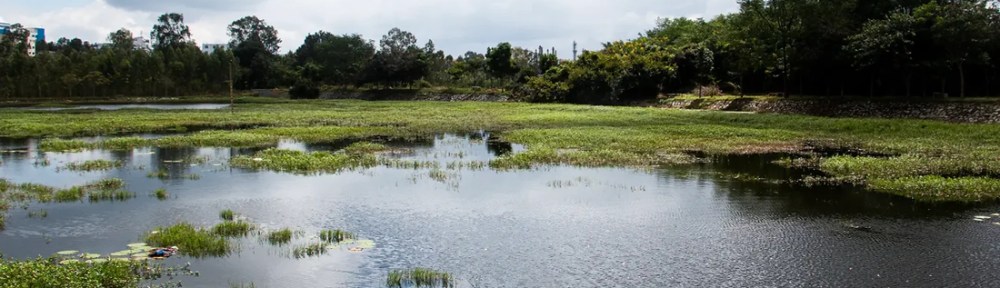
It was after he accidentally fell into Kyalasanahalli Lake near his office in 2017 that Anand Malligavad started on the work that has made him India’s best known expert on restoring lakes. When he told his company the next day that he would restore the polluted 36-acre lake if it funded the project, they laughed at him. But having since gone on to restore 35 lakes in Bengaluru which collectively hold 106 million gallons of water, seven in Ayodhya, nine in Lucknow, and 40 water bodies in Odisha, no one laughs any more.
Starting 1,500 years ago, the Chola dynasty built and maintained a self-sustaining network of irrigation lakes across the Deccan Plateau to make up for the lack of rivers. Bengaluru was once called the city of 1,000 lakes. But as it became India’s Silicon Valley, the man-made lakes that provided water for agriculture and drinking were filled in and canals leading to lakes were covered over. The growing water crisis is a direct result of dried up and choked lakes, experts say.
Of the historical 1,850 lakes in Bengaluru, only about 465 are left, and just 10% have clean water, with the rest choked with litter, Anand told the New York Times. Bengaluru now faces a water shortage of about 172 million gallons per day, a figure likely to double by the end of 2030.
After spending four months studying the Chola methods, including how to trap silt and sludge using carved stones, which need no maintenance, Anand put that knowledge to work, using a $100,000 corporate social responsibility grant from his company.
The Chola created separate lagoons alongside the lakes, where silt and garbage can be separated from sewage, with the human waste later used as fertilizer. “Ridges to rivers” involves building cascading mud walls that transport excess rainfall to lakes in lower areas before ending up in a river, supporting agriculture along the way.
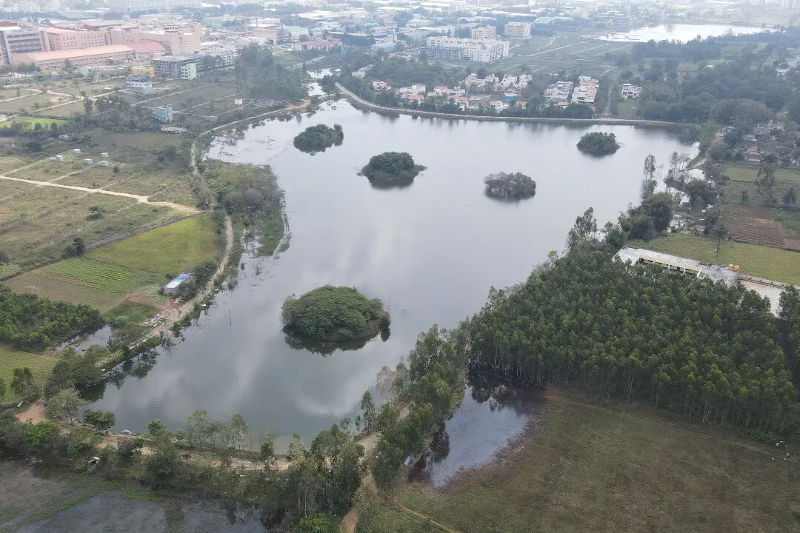
Anand cleaned up Kyalasanahalli Lake in 45 days, with a dozen excavators and hundreds of workers. He removed huge amounts of mud, waste and plastic, opened the lake’s blocked channels, created five islands with the excavated mud, and then waited for the monsoon rains. Six months later, the lake was clean, and there were ducks and migratory birds on the new islands.
Thanks in part to his efforts, the groundwater level in the Bengaluru region over the past eight years has risen by about eight feet, according to the Groundwater Directorate, a government body.
Anand’s success has made him a much-in-demand conservation expert across India, which has about 18% of the world’s population but just 4% of its water resources. He quit his engineering job in 2019 to focus full time on the water conservation work and has been offered advisory posts in many states across India. In the north, the Uttar Pradesh government has given him responsibility for reviving hundreds of lakes, as has the government in Odisha, where he has already revived around a dozen lakes.
“This is now the purpose of my life,” Anand told the New York Times. “I want to reclaim a hundred thousand lakes before I die.” Asked why, he says it’s obvious. “You can find alternatives to milk, but what will you do without water?”
Sources:
Meet India’s ‘Lake Man’, a Bengaluru-based mechanical engineer on lake revival mission… Onmanorama, Mar. 13, 2024
India’s ‘Lake Man’ Relies on Ancient Methods to Ease a Water Crisis New York Times
Engineer stuns researchers after using ancient techniques to aid return of lake system: ‘They laughed at me’ New York Times, Sep. 22, 2023
Cover image: Both photos are by Anand Malligavad.
 Hopebuilding