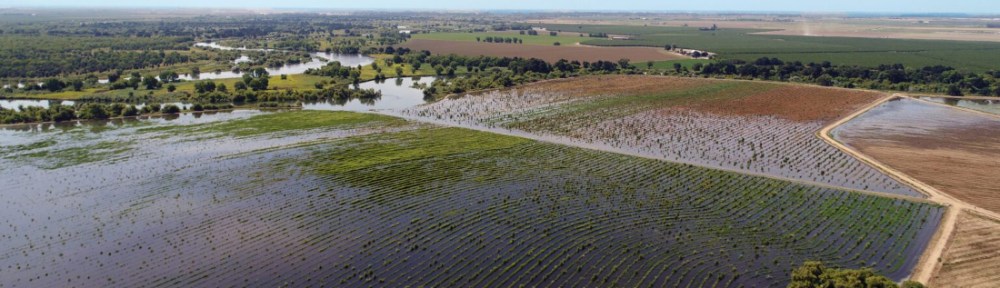
California’s newest state park is opening in the San Joaquin Valley on June 12. But it’s not just a park. Dos Rios Ranch, a 1,600-acre plot west of Modesto where the San Joaquin and Tuolumne rivers converge, is a “key asset to fighting the climate crisis”, says California Governor Gavin Newsom.
The site was donated by the Chico conservation group River Partners, which spent $40 million restoring the area from its previous incarnation as a dairy farm to its more natural state as a floodplain. River Partners bought the property in 2012 and began restoration work along eight miles of river. Berms built to protect farmland from high water were removed, but River Partners used existing irrigation infrastructure on former farmland to help young vegetation endure hot dry summers as it gets established.
The results speak for themselves. 2100 acres restored. 280,000 trees planted. Nine priority species protected. 7000 acre-feet of fresh water conserved, 8 miles of riverfront restored, 250 local jobs created, and $40,000,000 in competitive grants delivered to a severely disadvantaged community.
“Our collective efforts at Dos Rios united stakeholders from diverse sectors who worked together to grow a thriving river forest on a reconnected floodplain where it had once been lost and disconnected,” says River Partners president Julie Rentner.
The park’s imminent opening seems like a good time to share this inspiring River Partners video, which tells the story of how this amazing project happened. It is such a wonderful example of collaboration and of how locally-based development can be done in a way that benefits everyone.
“When we step back from the river, when we give the river more room, flooding actually is a very productive process for the ecosystem,” says John Cain, senior director of conservation of the nonprofit organization River Partners. “It recharges groundwater. It filters polluted water. It nourishes riparian forests that support all kinds of wildlife. It’s alive.”
“Opening Dos Rios is a game changer,” said Natural Resources Secretary Wade Crowfoot. “It provides a beautiful riverfront destination for San Joaquin Valley residents to get outside and recreate, in a part of the state with few such places. It also provides a new model of a multi-benefit park that also reduces flood risk for local communities, provides a refuge for local residents during worsening heat waves and restores the natural environment of the Central Valley to benefit local wildlife.”
During the winter and spring of 2023, the Dos Rios project proved that floodplain restoration is an effective flood control approach. The Pajaro River overflowed near the small town of Grayson, across the river from Dos Rios. Thousands of people were evacuated when a levee broke 50 miles southwest of Grayson during the record-breaking precipitation.
But Grayson, which is home to many farmworkers, didn’t sustain major damage because by opening up the levees, River Partners gave the water room to spread out, says Lilia Lomeli-Gil.
Floodplain restoration can help California cope with drought, too. Not only does growing native vegetation require less water than agriculture, when floodwaters spread across the land, the water seeps down into the groundwater, recharging overdrawn aquifers, Cain says.
Sources:
Dos Rios Ranch Preserve – California’s Largest Floodplain Restoration Project. River Partners
A Ranch, Rewilded: The Transformation of California’s Next State Park. Reasons to be Cheerful, Jan. 25 2024
California is finally getting a new state park this summer. San Francisco Chronicle, Apr 22 2024
 Hopebuilding