Six grassroots conservationists from around the globe were recognized and celebrated by the 2024 Whitley Awards for their locally-led solutions to the global biodiversity and climate crises. The awards were presented by the charity’s patron, HRH The Princess Royal, in front of nearly 400 guests at a ceremony in London, England, on May 1st.
The charity’s flagship prizes – often referred to by others as ‘Green Oscars’ – are won competitively each year. Following a worldwide search, applications are assessed by an expert judging panel. In addition to £40,000 in project funding over one year, the awards provide profile and training. Winners also join the community of over 200 Whitley Award alumni working across 80 countries– a network of peers across the Global South with whom they can share expertise, resources and support.
WFN’s top prize is awarded annually to a Whitley Award alumnus who has also received Continuation Funding. This laddered support allows successful conservation solutions to be scaled up. This year, wildlife biologist Purnima Devi Barman, from Assam, India, was honoured with that £100,000 Whitley Gold Award for her work to protect the Greater Adjutant Stork and its wetland habitat with her team at Aaranyak. She won a Whitley Award in 2017.
Before her intervention, the storks – known as ‘hargila’ in the local language – were thought of as smelly, dirty and unwanted vermin, and their numbers had dwindled to an estimated 450 birds in the state. Their numbers have now grown to more than 1,800 thanks to how attitudes have changed and local people, primarily women, have been galvanized to safeguard nests.
Purnima now wants to double the bird’s global population to 5,000 by 2030, working across the stork’s range in India and Cambodia.

Her project aims to grow community-driven conservation initiatives to bolster the number of Greater Adjutant breeding pairs, expanding support of local women to grow the ‘Hargila Army’. She will also establish a collaborative network of WFN alumni, students, scientists and policymakers, providing conservation education and promoting a knowledge exchange programme.
Winners of the 2024 Whitley Awards are:
Leroy Ignacio, Guyana
He is protecting the range of the endangered Red Siskin across both indigenous-titled land and state land. While an Indigenous community can create rules and protect the species on their own land, they cannot do this on adjacent state land.
Leroy is creating a co-management plan, including a legal framework for an agreement between communities and government, which can provide opportunities for paid employment for local people (as rangers, or managing ecotourism initiatives), allowing Indigenous communities to receive financial compensation for directly preserving their biodiversity.
He will be able to double the size of the Red Siskin Community-Based Conservation Management zone to 150,000 hectares and train community members in methods to reduce habitat destruction and improve the monitoring and effectiveness of the conservation zone.
Naomi Longa, Papua New Guinea
Kimbe Bay is an area of staggering marine biodiversity within the Pacific Ocean’s Eastern Coral Triangle, containing 76% (605) of the world’s coral reefs and 800 species of fish. However, it is under threat from overfishing, habitat degradation, and climate change.

Naomi and her team at The Sea Women of Melanesia work directly with local communities, primarily women, to design and implement Locally Managed Marine Areas to allow reefs to recover.
By providing continuous mentorship and skills development to empower women to take leadership roles within their communities, they hope to start a wave which will encourage other women to drive positive change.
Kuenzang Dorji, Bhutan
Bhutan is one of the last remaining ranges of the Gee’s Golden Langur, but its rapid development has brought wildlife in closer contact with humans.
Kuenzang’s project addresses the increasing conflict between people and primates – local farmers and Endangered Gee’s golden langurs – through the use of non-lethal deterrents and, crucially, by redefining the role of local people in conservation efforts in Bhutan.
Communities will help gather critical data to better understand the langur’s behavioural patterns. Kuenzang will also train 30 locals and foresters in primate survey and social research that supports long term monitoring in the ecologically fragile Himalayan Ranges, and will provide fellowships to five local students who are keen to pursue research in primatology.
Aristide Kamla, Cameroon
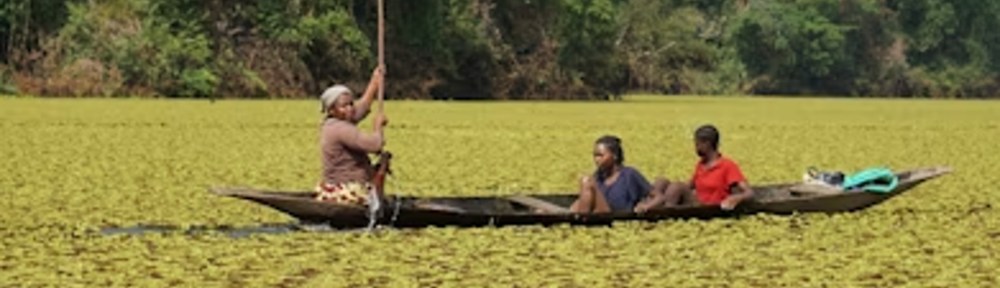
African manatees living in the freshwater of Lake Ossa are under threat from an invasive plant species known as giant salvinia, which covers the water’s surface and prevents the manatees from surfacing to breathe.
The invasive plant is able to take hold due to increased nutrients in the lake’s water from industrial pollution. In response, Aristide has been using ‘biological control’ in the form of the salvinia weevil, which naturally eats the giant salvinia plant, to clear the weed from the water’s surface.
He is undertaking a study to showcase how poor management of the watershed upstream affects aquatic ecosystems and livelihoods downstream. His project will provide the foundation for better water resource management, while simultaneously improving local peoples’ livelihoods by supporting community-managed fish farming and developing opportunities for ecotourism
Raju Acharya, Nepal
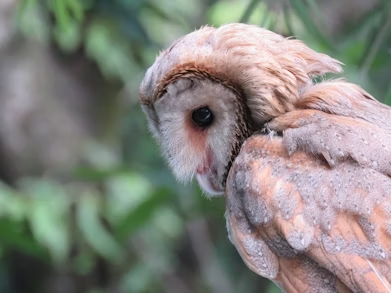
Central Nepal provides habitat for 19 species of owl. Raju Acharya led the development of the ‘Owl Conservation Action Plan for Nepal,’ which identifies the major threats to owls as hunting, illegal trade, habitat loss and degradation.
Whitley Award funding will now support him in implementing the solutions from this action plan. His project will train ‘owl envoys’ to protect 500 old trees, enable 11 training events to increase the capacity of law enforcement agencies, policy makers, and local owl envoys to reduce the rate of hunting and trade, and allow the installation of 100 artificial nests, giving owls space to thrive.
Fernanda Abra, Brazil
The construction of highways through Brazil’s forests is destroying habitat connectivity, with the associated effects being one of the main causes of declining primate populations. One highway, BR-174, cuts through Amazon forest including the Indigenous territory of the Waimiri-Atroari people.
Fernanda collaborates with this community and the Federal Transportation Agency to install artificial canopy bridges that allow primates to safely cross highways from above, avoiding deadly road impacts. Her project will maintain and monitor these crossings, as well as install new bridges and train 200 people from Federal and State transport environmental agencies to scale wildlife-friendly infrastructure.
The 2024 awards were the 30th such ceremony. “After three decades, our vision remains steadfast: to create a future where communities and wildlife thrive together on a healthy planet, and we know that it is only together, through the many collaborations and partnerships that make our charity the success that it is, that we can achieve this,” said founder Edward Whitley, OBE.
Cover image: Hand clearing the invasive giant salvinia on Lake Ossa in Cameroon. Photos by the Whitley Awards.
 Hopebuilding