Marie-Alix de Putter’s husband was murdered in Cameroon 12 years ago, when she was four months pregnant. It was the support of her hairdresser, and extensive psychotherapy, that kept her alive.
That experience led her to found Heal by Hair, which has trained around 150 hairdressers across Togo, Ivory Coast and Cameroon in west Africa to counsel their clients while getting their hair, nails and facials done.
“The biggest challenge was to convince the hairdressers of their value,” de Putter says. “They didn’t believe me when I told them what they do is important for their community.”
Nowhere in the world is the so-called ‘mental health gap’ wider than in Africa, says Positive News. Between 85% and 95% of people with severe mental health conditions don’t have access to any type of care. In a region that only has 1.6 mental health workers per 100,000 people – the global median being 13 – neither have sufficient access to any professional care during a mental health crisis.
That’s where community-led projects like de Putter’s come in.
Ariatou Ouédraogo, who runs a small salon in Abidjan, Ivory Coast’s economic hub, received the title of mental health ambassador after a three-day training course led by the nonprofit Bluemind Foundation. She learned to spot subtle signs of distress and to ask questions that encourage people to open up. Many of her clients refer to ‘household issues’, which often including emotional and physical violence, marital problems or substance abuse.
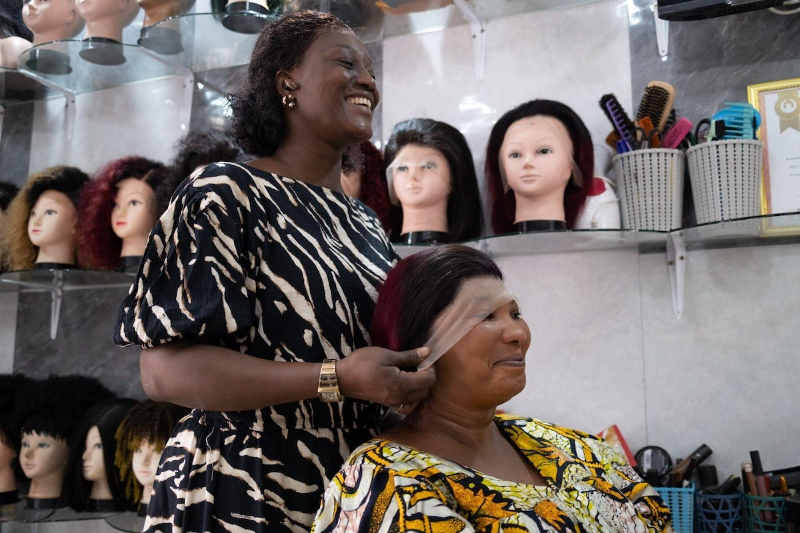
Providing basic help and first aid, hairdressers and similar community-led initiatives make up a crucial pillar to address the continent’s mental health gap.
“This is the only place I can go to,” says one of Ouédraogo’s clients. “Without Ariatou, I wouldn’t know what to do.” Many of her clients have now become ‘sisters’ who go to the beach or exercise together – strategies to help keep their mental health in check.
De Putter plans to further expand her project across west Africa and beyond, even to Spain, Portugal and France. Meanwhile, her Ivorian mental health ambassadors are spreading their knowledge in and outside their salons.
This is one of a series of wonderful stories that Positive News has been providing as part of its Developing Mental Wealth series over the past year. It focuses on community-led projects boosting mental health across the globe, inspired by Zimbabwe’s Friendship Bench project.
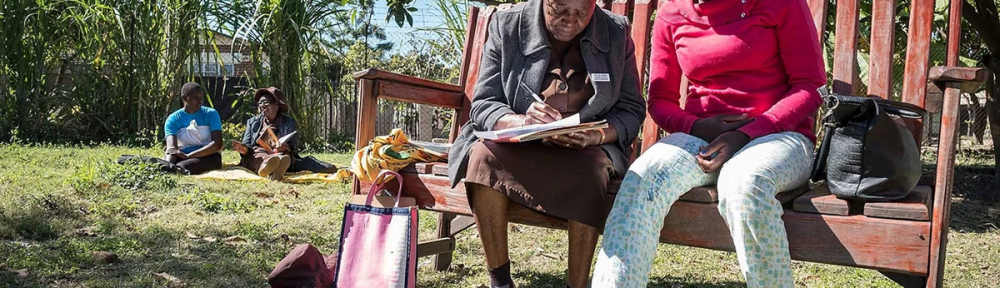
“Without the help of medical professionals or drugs, and with very little money, peer-reviewed trials had found that it was easing the depression and anxiety of Zimbabweans. The secret? Grandmothers, trained briefly in CBT counselling skills and deployed in the community to help anyone who needed it.”
“We knew there must be more, so we set about finding other community-led projects that were easing the mental distress of people living in tough circumstances in low-income countries. It turns out there are plenty……”
“These projects are all run on shoe strings, by a small number of active citizens, who, having recognised a problem in their communities, have come together to do something about it. Their common tool – one that is low cost, simple, and everywhere – is each other. People talking to one another, supporting one another, being there to listen, encourage and advise.”
I encourage you to read these powerful stories, and share them widely. The rest of the world can learn from these frugal innovations. The friendship bench, the project that got Positive News on this road, is coming to London, England, and there is one in New York, too.
The series is produced by Positive News and funded by the European Journalism Centre, through the Solutions Journalism Accelerator. This fund is supported by the Bill & Melinda Gates Foundation.
“The 12 projects in our series are proof that there is nothing more healing than simple human connection,” says Daisy Greenwell. “Mental illness is a huge problem, but it can also, according to the World Health Organisation be ‘effectively treated at relatively low cost’. I find great hope in that.”
 Hopebuilding