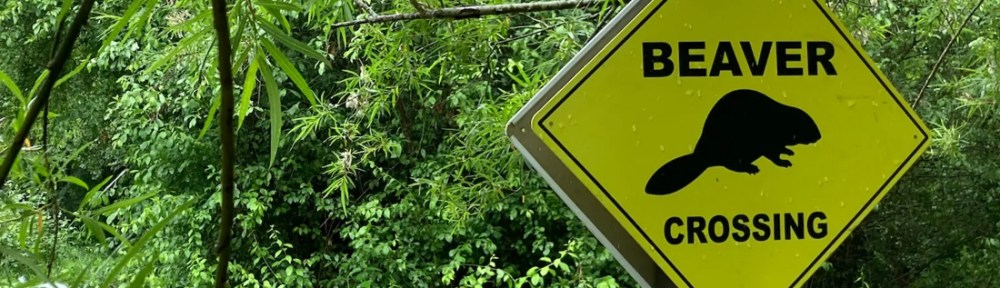
The first beaver family to live in the city of London in 400 years is thriving – and may well be reproducing at the Paradise Fields in Greenford, Ealing, the nature reserve where they were introduced seven months ago.
You can hear the road and see high-rise flats from their new home on the Capital Ring footpath, but none of this seems to have bothered the beavers. Their first dam – one of five they’ve created – was to create deep water before they have to cross the footpath, which runs through the site, says Dr Sean McCormack, project lead on the Ealing Beaver Project.
“To a beaver they don’t know if there’s a bear, a wolf, a lynx around every corner. It’s their instinct to create deep water so they feel safe. They’re basically checking that the coast is clear upstream here.”
The dams also filter the water, and Greenford thinks the beavers’ work is tackling flooding, so it has not gone ahead with planned flood mitigation work.
“Anecdotally, we have seen a difference,” says Dr. McCormack. “They have created five dams and those dams are holding back water. And when we have had a horrifically wet winter like we have just had, we can see the amount of water that is spread out across the land. They are weakening the flow, they’re holding more water on the site and they’re releasing it slowly into urban Greenford.”
The controlled trial, under a licence granted by Natural England, is a joint project between Ealing Wildlife Group (EWG), Ealing Council, Citizen Zoo and Friends of Horsenden Hill, and supported by experts at the Beaver Trust. An enclosed trial allows study before free-living beaver reintroduction is considered or natural recolonisation occurs over the coming years.
Having spent the £37,000 provided by the Mayor of London through his Rewild London 2 Fund for site preparation, baseline ecological surveys and establishing monitoring activity and community engagement, the project is looking for more funding to increase its educational element. The beavers are very popular locally, and beaver walks quickly sell out. Volunteers who monitor the site says they have seen kingfishers for the first time.
Project ecologist Nadya Mirochnitchenko says the beavers, a keystone species on which many other species rely, are “creating more of a wetland area” that is benefiting biodiversity including pond life, birds, insects, bats, newts and frogs.
Eurasian Beavers once lived all over Europe and Asia, she says, but were hunted to extinction in the UK four centuries ago for their warm, water resistant fur. People didn’t realize the nature of the huge ecological changes caused by their disappearance until more recently. They have been reintroduced in enclosed and open-release sites in England, Wales and Scotland, and can now be found in Kent and Oxfordshire.
Sources:
Ealing beavers: Dams, canals – and perhaps babies. BBC, May 28 2024
Bringing Beavers Back to London Ealing Wildlife Group
 Hopebuilding
What a fun read!
I love these stories about the beavers returning, which represent a great deal of work by advocates who call themselves the ‘Beaver Believers’, and there is an annual State of the Beaver conference that has been going on since 2010 in Canyonville, Oregon.