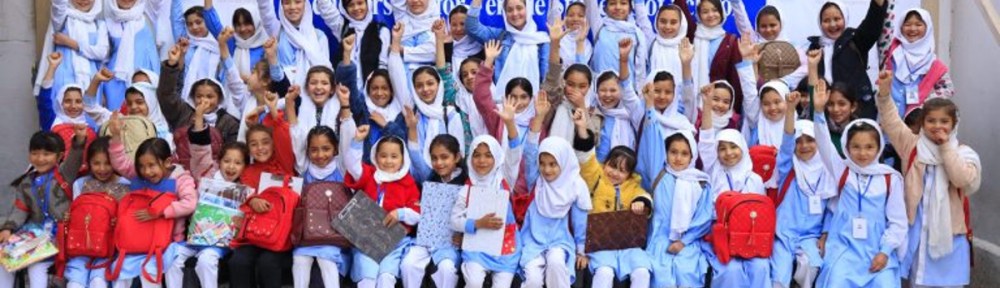
Nineteen female Afghan medical students who had been barred by the Taliban from attending university have arrived in Scotland to continue their medical studies, thanks to the Linda Norgrove Foundation.
Three years ago, the foundation began a campaign to bring the students to Scotland to study, and reached agreement with Scotland’s medical schools to offer them places. The students were among more than 100 that the foundation was sponsoring to study medicine in Afghanistan.
Linda Norgrove was kidnapped in Kunar on 26 September 2010 and died in an attempted rescue by US forces on 8 October, aged 36. She had devoted her working life to helping to improve the life of others, especially in Afghanistan, and had taught herself to speak Dari, an Afghan version of Persian, to help her establish proper relationships with her Afghan staff and the local communities she visited and worked in.
“It’s fantastic news that this group of women have arrived in Scotland,” said Kirsty McNeil, Under Secretary of State for Scotland. “The determination of the Linda Norgrove Foundation to bring these women to Scotland to complete their degrees has been unwavering. Seeing them finally arrive safely here marks the culmination of months of co-operation between the charity and the Scottish and UK governments. I’m very pleased that, by working together, we have been able to bring them to Scotland.”
The Scottish Government agreed to amend student funding regulations, allowing the women to be treated as home students, meaning they are eligible for free tuition, the foundation said.
“The changes we made to the legislation will ensure they can access the same benefits as their peers, including free tuition and student support,” says Scotland’s Education Secretary Jenny Gilruth. ‘Scotland has a proud history of welcoming people from across the world who need support. I wish each and every one of these inspiring women the warmest of welcomes to Scotland and look forward to the positive contribution they will make to our country.”
The foundation and the students worked to clear many hurdles: TB tests, English tests, university interviews via Skype, negotiating the border travel to Pakistan to apply for UK visas, Pakistani visas, biometrics, accommodation, student funding applications, student accommodation applications, and bank accounts.
The Foundation has paid all the costs of getting the students to the UK and to help establish them, amounting to £60,000 and rising – significant operation for a small charity with only one employee.
The students include Fariba Asifi, Omulbanin Sultani, Arifa Wahdat and Zahra Hussaini.
Omulbanin, 21, who will be going to St Andrews, studied for two years at Kateb University in Kabul before she was banned. She said the past three years had been “the most challenging years for me, my friends and all women in Afghanistan”.
“We endured 1,000 days of suffering to reach this point, 1,000 days of being confined to our homes, 1,000 days of having our voices silenced”, said Omulbanin. “One thousand days with nothing but tears and sorrow, 1,000 days of our lives wasting away. When we heard about the visa approval, we were so excited I felt like I was flying. We are going from hell to paradise.”
Fariba was inspired to become a doctor after both her mother and brother became ill and could not be treated in Afghanistan. She was in the final stage of her medical studies in Kabul when the Taliban banned most women’s education.
The Taliban visited her home and threatened her because she took part in a women’s demonstration. “These days I feel like God has granted me a miracle in life, and I am soaring towards my goals and dreams, smiling and happy every second,” she says.
Zahra, 19, will be studying medicine at Glasgow University. She has wanted to become a doctor since she was at school, and had been studying English in preparation for a medical career. “Many people helped us and we are thankful for them. With our studies we hope we will prove we deserved to be given this amazing opportunity,” she said.
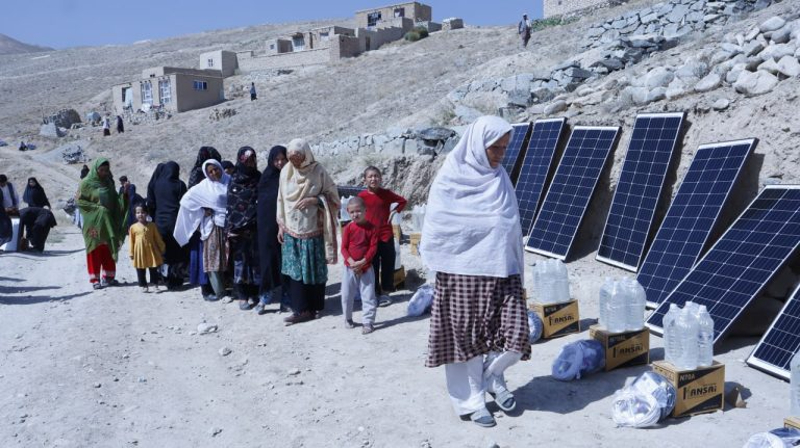
The foundation supports programs ranging from children’s life-changing surgery to mobile libraries, school funding to maternal health services, and vocational training to emergency aid. They are funding study places for midwives; supporting the installation of solar panels in woman-headed families who don’t have electricity; and fund a maternal health project in Herat for mothers and children suffering from extreme economic hardship and malnutrition.
Cover image and photo: Linda Norgrove Foundation
 Hopebuilding