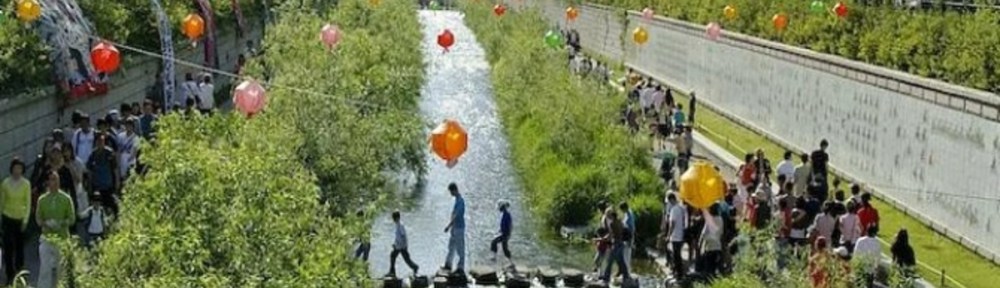
There is a term for bringing a buried river back to life. It’s called ‘daylighting’, and one of the most spectacular examples is in South Korea.
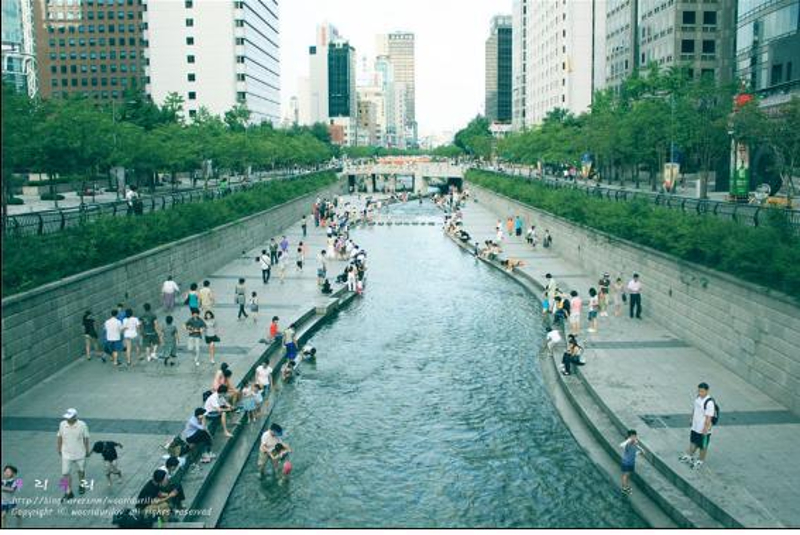
By demolishing an elevated freeway and uncovering a section of the historic Cheonggyecheon Stream, the Cheonggyecheon Restoration Project created both ecological and recreational opportunities along a 3.6-mile corridor in the center of Seoul. The project has spurred economic growth and development in a part of Seoul that had languished over several decades.
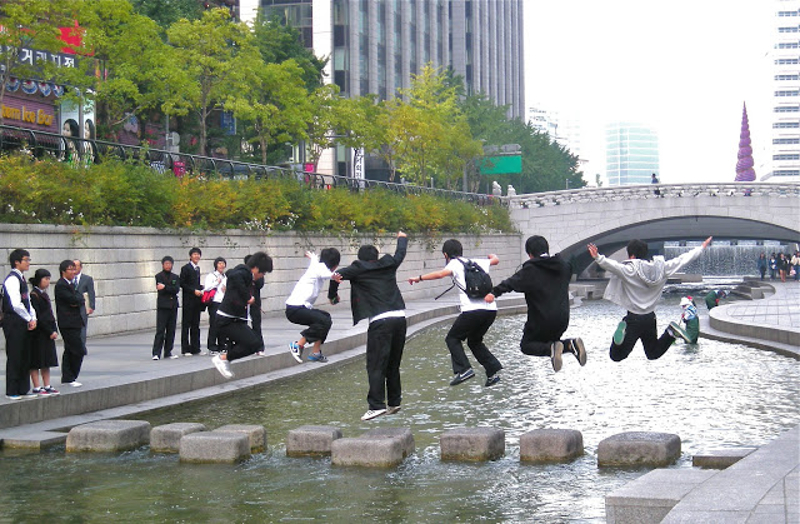
Since it came back to life in 2005, the Cheongggyecheon river has become one of Seoul’s biggest tourist attractions, as well as a cultural centre and an oasis in the city for both citizens and native wildlife. More than 200 million people have visited, including representatives of governments who are hoping to replicate the same model back in their hometowns.
The Cheonggyecheon was one of the Han River’s tributaries. When Seoul became the capital of the Joseon dynasty, a social hub flourished along its banks, but after the Japanese occupation (1910-1945) and the Korean War (1950-1953), the area deteriorated into a public health hazard and was paved over as Seoul urbanized.
In 1968, the ‘Cheonggye Elevated Highway’ became a symbol of Korea’s progress; carrying over 170,000 vehicles every day. By the 1990s, its surroundings had grown into a noisy commercial area. But the roadway was showing signs of deterioration and scholars and intellectuals began talking about the radical idea – demolishing the roadway, and restoring the stream to its original state.
By 2002, the Cheongggyecheon Restoration Project had turned into a reality, part of a paradigm shift in which quality of life and functioning ecosystems were the focus of urban development. An overwhelming majority of city residents supported the idea.
In 2003, the municipality allocated a budget of 380 billion won (345.2 million USD) and 700,000 employees started working on rehabilitating 5.8 km of the creek. The project was divided into eight stages and lasted two years and three months.
 Hopebuilding