Canada has the Healthy Food Guide; the UK has the Eatwell guide; the US has the MyPlate guide. All have the same idea – teaching people about a healthy diet that incorporates fruits, vegetables, grains, protein foods, and dairy.
But what if your part of the world doesn’t produce that kind of bounty?
The Hunger Project has been working with Indigenous communities in Chiapas and Oaxaca, Mexico, to address nutrition and food security across the region. In 2021, more than one in four people living in the Mexican highlands grappled with chronic hunger.
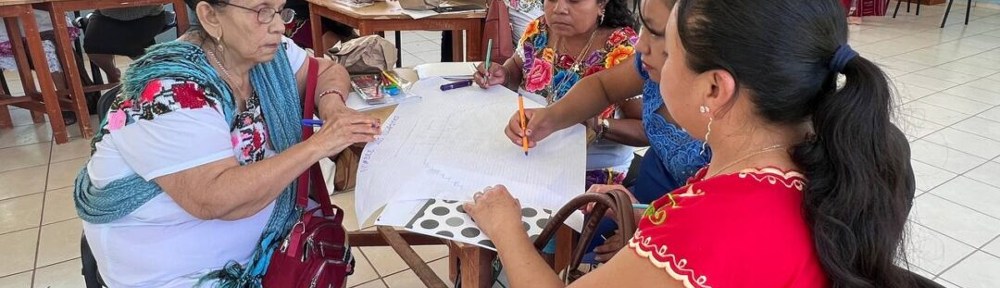
It is working with community partners to address the challenges of limited access to clean water, health care and sustainable livelihoods, by elevating and celebrating Indigenous knowledge and cultural practices through localizing EatWell plates.
The Traditional Regional Plate project had three interconnected goals:
- Identifying nutrient-rich local crops;
- Preserving Indigenous agricultural knowledge; and
- Adopting traditional and regional recipes.
Using a participatory, community-led strategy, they identified nutrient-rich local recipes and traditional crops that have a high protein content. Traditional herbs such as hierba mora and chiplin are native to the region, are resilient to climate changes, and are rich in essential vitamins, minerals and proteins that help combat malnutrition.

Between October 2022 and November 2023, local leaders were trained in farming, seed-saving, agroforestry and fish farming. A community seed fair allowed local farmers from various communities to share experiences and seeds, encouraging diversity in crops. Seed saving and seed banking activities preserve and pass on valuable knowledge from one generation to the next, elevating the voices of Indigenous communities.
An advisory group, driven by Tzotzil-speaking leaders, championed traditional, nutrient-dense plates that use local crops and protein-rich sources. In partnership with community leaders, they crafted recipe guides in Tzotzil to promote a lasting culinary legacy. Two nutritional guides emerged, promoting nutrient dense, locally sourced foods.
Then, to enhance access to those foods, they worked with the community to establish 11 tilapia ponds, four seed houses and six community demonstration plots, engaging 162 community members in agroecological, leadership and mentorship training.
“As we continue to build upon the success of the Chiapas Traditional Regional Plate project, we reflect on the journey we’ve undertaken,” the Hunger Project says. “It’s not just about food; it’s about empowerment, partnership and the celebration of cultural heritage. Together with our partners, we’ve planted seeds of change that we hope will continue to grow and sustainably nourish the Indigenous communities of the Chiapas.”
The photographs are from the Hunger Project’s story.
 Hopebuilding