When billionaire Elon Musk gleefully put USAID in the woodchipper, Village Health Works in Burundi was down to its last 20 packets of Ready-to-Use-Therapeutic-Food, a peanut butter-based porridge used to treat malnourished babies and children.
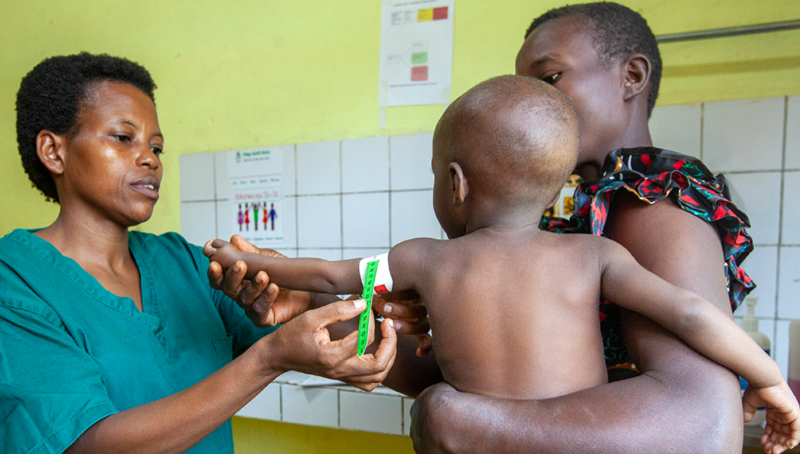
VHW, which offers free healthcare for Rumonge and Bururi provinces at its state-of-the-art, 150-bed women’s health pavilion, relied on USAID funding to cover medications for HIV/AIDS and tuberculosis and pay for the RUTF, which it got from Mana, one of two US firms that make it. Three packets can help turn an emaciated and wasting baby into a round and thriving one in eight weeks.
“Last week, I was struck by the hollowed eyes and scooped-out belly of a four-year-old boy,” wrote Dr. Jennifer Furin in TIME magazine at the time. “He weighs just 17 pounds. He was so weak, he could not hold his head up when I examined him. We are doing our best to care for this child, but before rounds started, the nurse on the ward pulled me aside to whisper that we were down to our last 20 packets of ready-to-use therapeutic food.”
In 2024, 56% of children under five in Burundi suffered from chronic malnutrition, 6% experienced acute malnutrition and 29% were underweight.
But sometimes a problem can turn out to be an opportunity, says Deogratias “Deo” Niyizonkiza, VHW’s founder and CEO. It has sparked a project to make the RUTF locally, which will benefit local farmers and create jobs as well as feeding starving children. Magara Meza, which means living well, hopes to lay the groundwork for national provision of RUTF.
“This collaboration will really change a lot the ways we used to do things. Relying on what is produced locally and what is grown locally is just the way it is supposed to be done,” Deo says.
“To be able to produce our own peanut porridge is so important to addressing the issue of malnutrition that has been decimating the children of Burundi.”
VHW plans for Magara Meza to be in full production by 2026. Until then, health care volunteers travelling to Burundi are hiding RUTF packets in their luggage, and Mana is sending a shipment of RUTF to Village Health Works to address immediate needs.
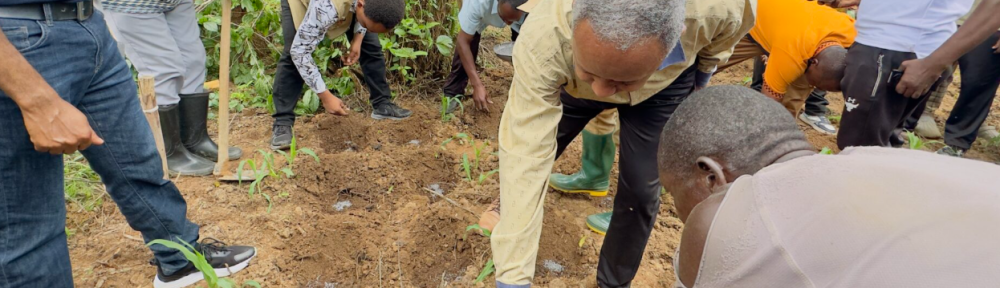
Farmers are already planting new crops of nuts, and a space for the new production facility on the VHW campus has been allocated. Burundi’s Ministry of Health is also on board, and much of Alongside Hope’s funding will support the cost of training local people to run and own a social enterprise business.
As of January 2026, more than 1,000 kg of ground nut seeds had been planted by 280 farmers, and bushy green plants were in bloom. The production facility is also underway, and peanut processing machinery on order. The first harvests for Magara Meza domestic production are being harvested.
The project has helped local farmers. “Before the Magara Meza project, I did not know about improved peanut seeds or its modern farming techniques,” says Gerard Simbogoye, 54, of Buzimba. “Peanuts were a secondary crop, unpredictable and low-yielding. …VHW introduced certified seeds adapted to our climate and provided in-depth training. I learned about crop rotation, natural fertilizers, and early pest detection.”
VHW will buy the farmers’ crops at fair market prices. “With these earnings, I will repair my house, pay school fees, buy tools, care for the sick, and even begin saving,” Gerard says.
For years, protein-rich peanuts felt out of reach to farmers like Jeanne Ndayisaba, 35, president of the local farming cooperative. “Our harvests were poor, seeds were weak, and the market was inaccessible.” Now the cooperative has received high-quality peanut seeds and farmers learned how to plow correctly, space plants, conserve moisture, and monitor for disease.
She looks forward to selling part of the crop to buy maize, vegetables, school notebooks, and clothes and to the day when her children will enjoy peanuts roasted, in sauce, in peanut butter, and even in a nutritious paste. “Their health will improve, and their laughter will return,” she says.
Niyizonkiza, who was born and raised in Burundi, fled to the US during the civil war in the 1990s and attended Columbia University in New York. He returned home with a vow to bring quality health care to his community. Alongside Hope partnered with VHW from 2016 to 2021 on the All Mothers and Children Count program, funded in part by the Government of Canada.
Days after Alongside Hope granted $35,000 from its new Resilience Fund, which was launched to support partners blindsided by the USAID cuts, a donor came forward with $250,000 to match donations made to the Resilience Fund. Alongside Hope boosted its support for VHW’s bold plan to $140,000.
Images are from the Alongside Hope website.
Sources:
Peanut power brings resilience to Burundi. Alongside Hope, Feb. 11, 2026
From problem comes opportunity: Burundi partner to make life-saving food locally instead of importing it. Alongside Hope, May 13, 2025
 Hopebuilding